Prices are estimates from typical local jobs and vary by home.
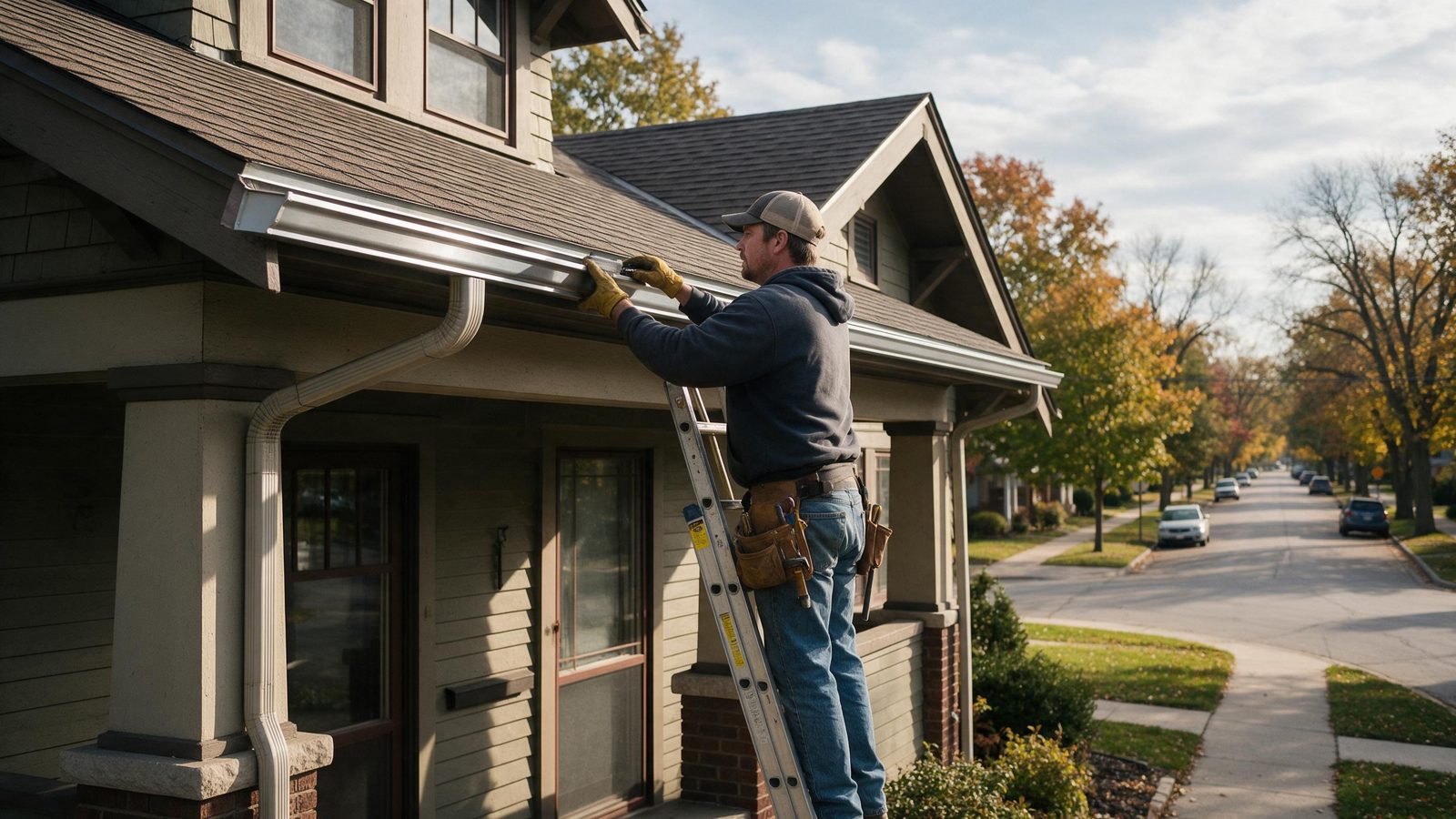
Big old trees and steep rooflines are part of what makes Iowa City neighborhoods beautiful, and they are hard on gutters. We connect homeowners with local crews for new seamless gutters, guards, repairs and downspout fixes.
Call Get a free quote ShopGutters do one quiet job: they carry roof water away from the house. When they clog, sag or spill over, that water ends up beside the foundation, where it can soak into basement walls, wash out landscaping and freeze into ice along the sidewalk. In neighborhoods like the Northside, Longfellow and Manville Heights, mature oaks and maples fill gutters every fall, and steep pitches send water off the roof fast during a summer downpour.
Homeowners in the 52240 ZIP code and across Johnson County can use this service to reach gutter installers and repair crews. Some homes need a complete replacement with five- or six-inch seamless aluminum. Others just need a few sagging runs rehung, a leaking corner resealed or downspouts extended past a flower bed. Describing the problem helps the crew bring the right materials.
Iowa winters add another challenge. Snow on a warm roof melts, runs down and refreezes at the cold eaves, building ice dams that pull gutters loose and push water under shingles. The fix often involves more than the gutters themselves, so a good pro will look at attic insulation and ventilation and explain what is really causing the ice.
A useful gutter estimate lists the linear feet, gutter size and material, number of downspouts, hanger type and spacing, and whether old gutters will be hauled away. If you are considering guards, ask how they handle the seeds and needles from your specific trees, since no guard works equally well for everything.

Seamless aluminum gutters are formed on site to fit each run, which means fewer joints to leak. A crew can recommend five- or six-inch profiles based on roof size and pitch, and match a color to your trim.
Screens, micro-mesh and solid covers reduce how often gutters need cleaning. A local installer can explain which type suits heavy oak leaves, maple seeds or pine needles, and how each one handles heavy rain.
Sagging sections, loose spikes and leaking seams can often be fixed without replacing everything. A pro can install hidden hangers, reseal corners and correct the slope so water flows toward the downspouts.
Downspouts that dump water against the foundation are a common cause of damp basements. A crew can add downspouts, upsize them, run extensions or connect them to underground drains that carry water away.
Seasonal cleaning clears leaves, shingle grit and debris, then flushes downspouts to make sure they are open. Many homeowners schedule cleaning in late fall after the leaves drop and again in spring.
Heat cables, better attic airflow and added insulation can reduce ice dams. A pro can look at the whole picture and recommend steps that protect both the gutters and the roof edge.
This site is only for gutter in Iowa City, IA and nearby towns. We connect you with a pro who works in the area.
Share your town, what you need and how soon. There is no cost to ask and no obligation.
The costs, steps and questions on this page are general guides, so you know what to ask before you hire.
Ask any pro for a written estimate that lists the work, materials and timeline before the job starts.
Avoid working from a ladder on wet, icy or windy days, and never lean a ladder against a gutter. Note what you can see from the ground and let a crew do the work up high.
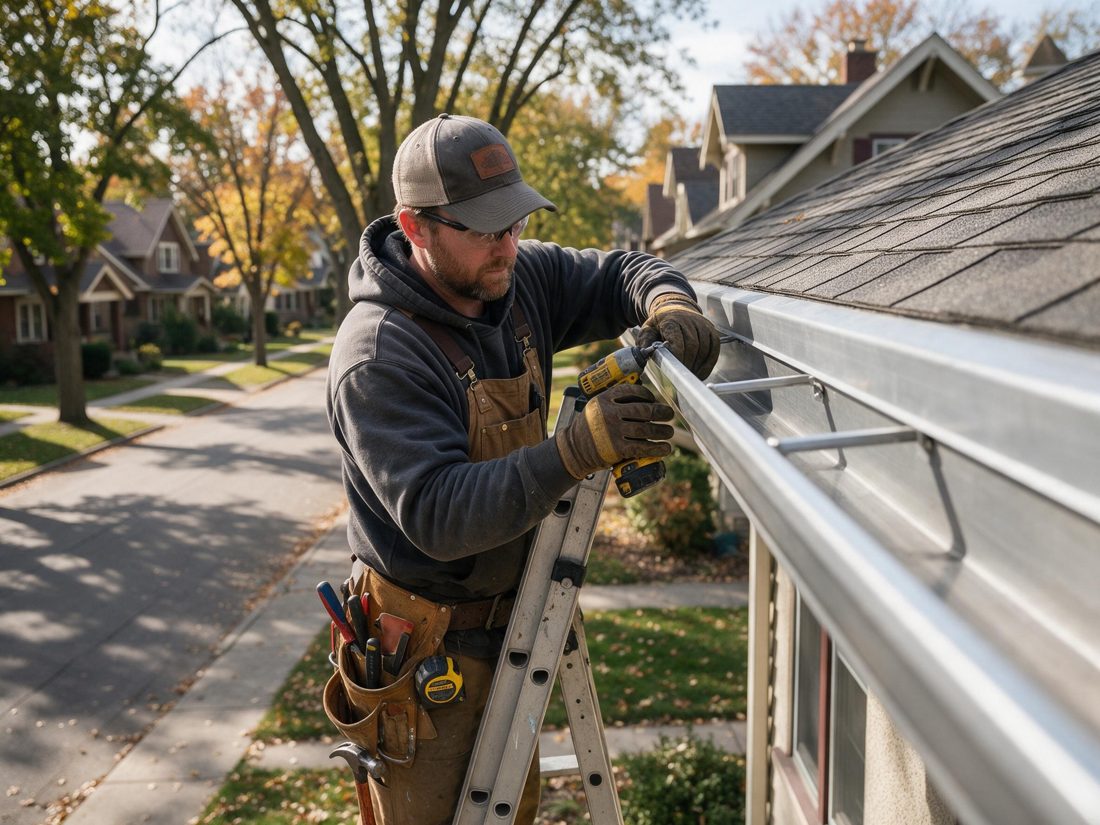
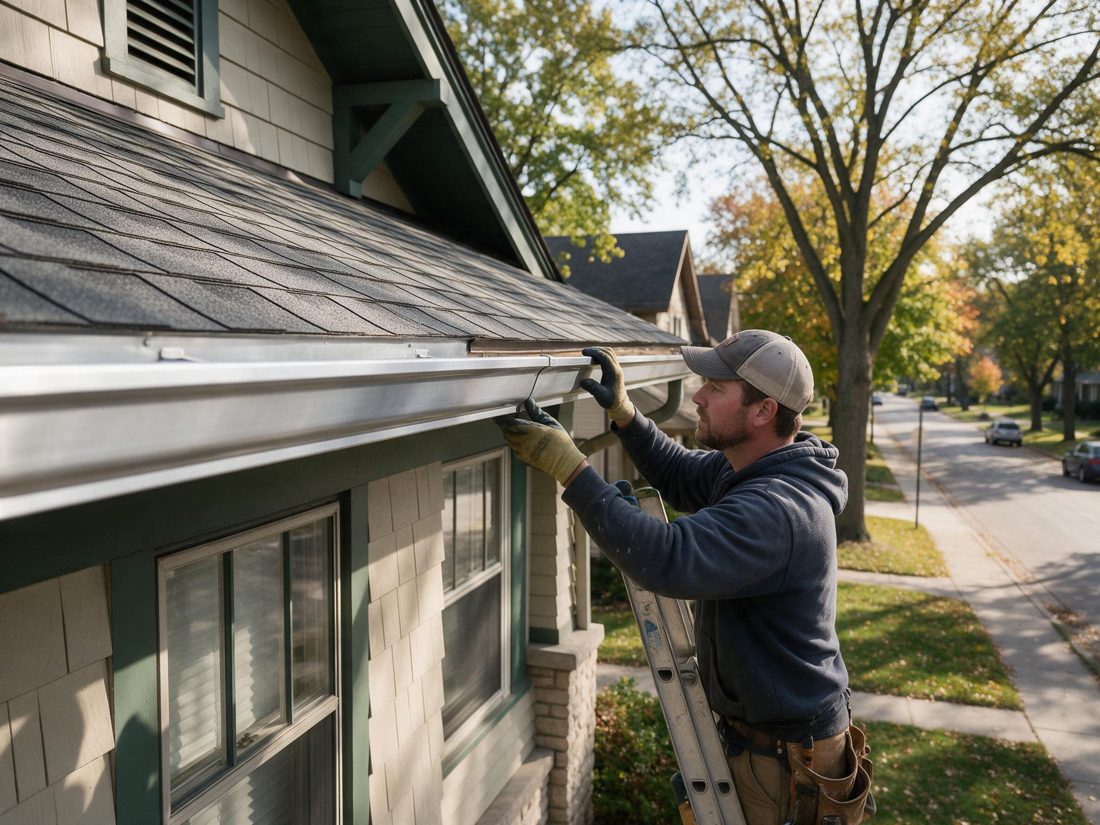
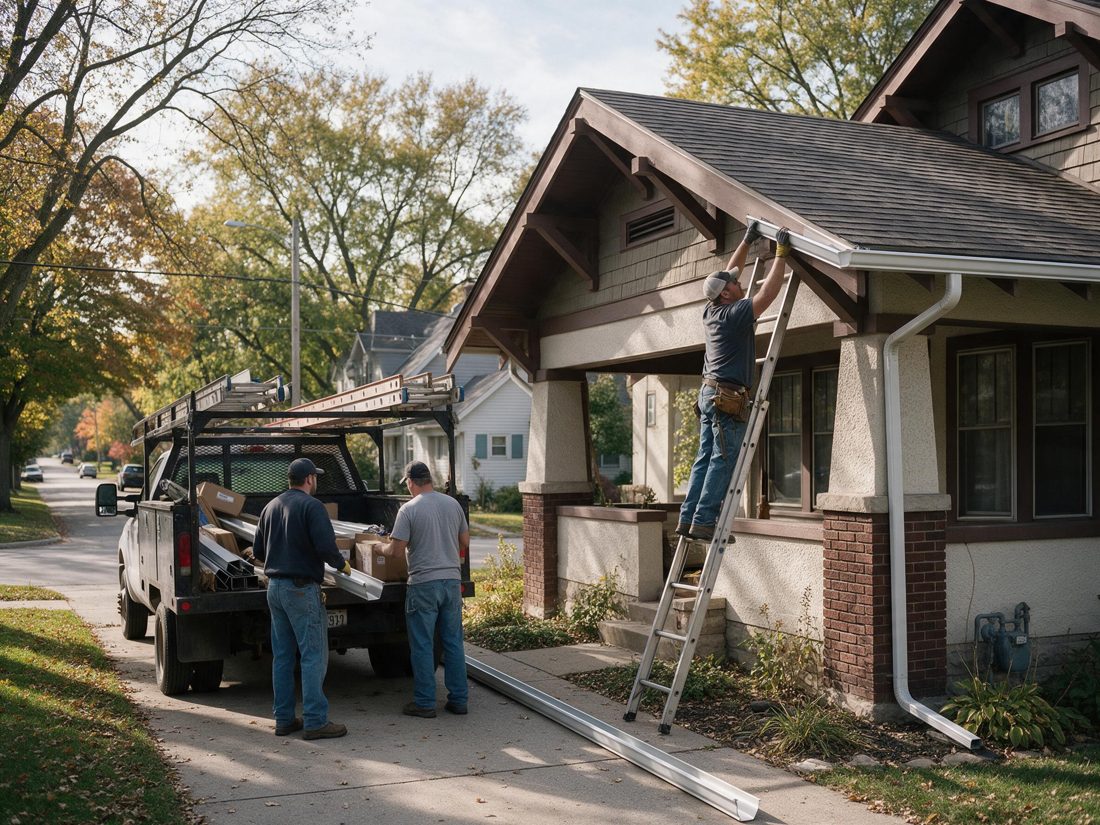
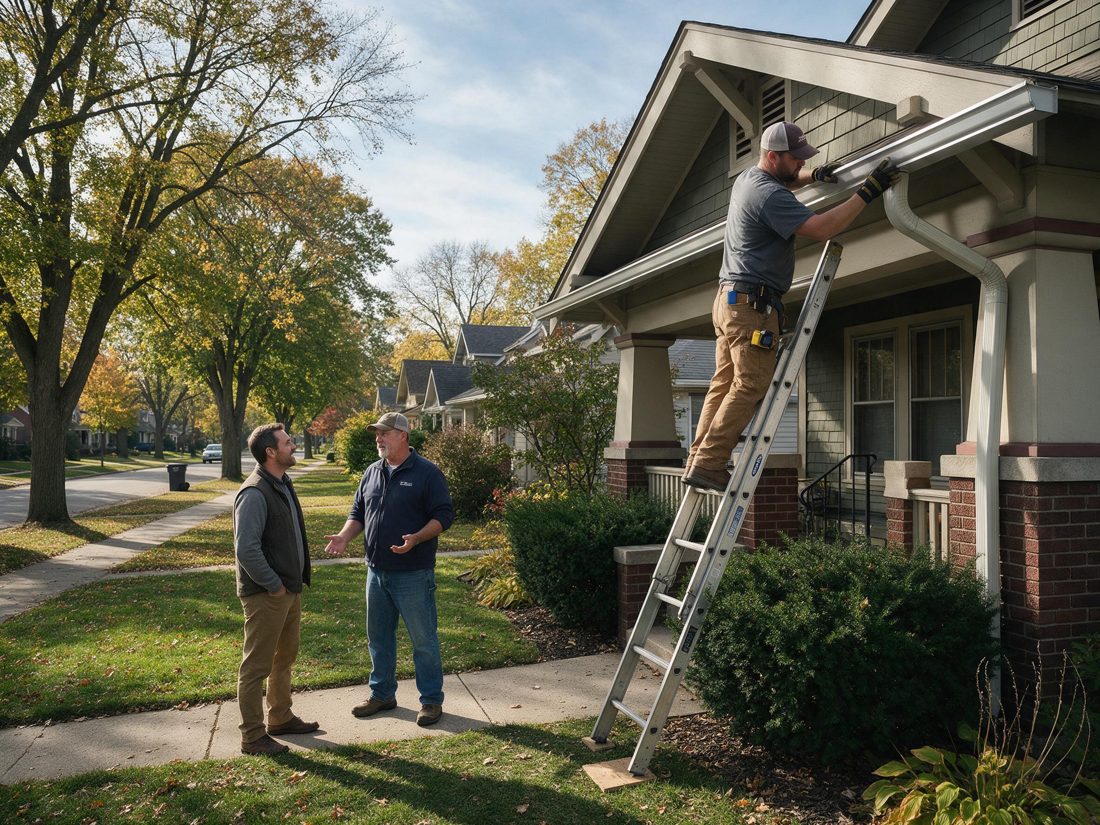
New seamless aluminum gutters typically cost $8 to $15 per linear foot installed, so a typical Iowa City home with 150 to 200 feet of gutter often lands between $1,500 and $3,000. Six-inch gutters, steep roofs, multiple stories and extra downspouts can raise the total.
Gutter guards usually add $7 to $20 per linear foot, depending on the type. Repairs such as rehanging a sagging run or resealing corners are often a few hundred dollars, and seasonal cleaning commonly costs $150 to $300 for a one- or two-story home.
If the fascia boards behind the gutters are rotted, they need replacing before new gutters go up. Ask the crew to note any soft wood in the estimate, along with a price per board, so there are no surprises on installation day.
Plan a cleaning after the last leaves fall in November, then check again in spring after the maples drop their seeds. Look at downspouts during a heavy rain: if water is coming out of the seams instead of the bottom, there is likely a clog.
Make sure each downspout discharges at least four to six feet from the foundation, or into a drain that carries water farther away. On sloped lots common around Iowa City, a pro can direct water toward the street or a rain garden instead of a neighbor's yard.
If ice dams form every winter, the gutters are usually the victim rather than the cause. Ask about air sealing and insulation in the attic, which keep the roof deck cold and stop the melt-and-refreeze cycle at the edge.
When you compare bids, check the gutter size, metal thickness, hanger type and spacing, and warranty. Ask whether the crew forms the gutters on site and how they protect landscaping and windows during installation. A local installer who serves Iowa City, Coralville and North Liberty is easy to call back if something shifts after the first winter.
Local crews often work in Coralville, North Liberty, University Heights, Tiffin, Hills and Solon too. Share your address and project details to see if a pro serves your location.
Iowa City has a large stock of older houses, from the Victorian and Queen Anne homes near the Brown Street and Summit Street historic districts to the bungalows and foursquares spread across the Northside, Longfellow and Goosetown. Many of those houses were built with built-in box gutters, sometimes called Yankee gutters, that sit inside the roof edge and are lined with metal. When the lining fails, water goes straight into the cornice and the wall below, and the rot is often found only when paint starts peeling.
Repairing or relining a box gutter is specialized work, and so is choosing between restoring it and covering it with a new roof edge and hung gutters. Half-round gutters with round downspouts are a common choice when an older house needs new hung gutters, because they fit the period look better than modern K-style profiles.
If your home is in a local historic district or conservation district, exterior changes can need review by the Iowa City Historic Preservation Commission before work begins. Ask your installer whether they have worked on homes in those districts and check with the city before you sign.
Iowa City is a hilly town. On a sloped lot, roof water that leaves a downspout can run straight back toward the foundation on the uphill side, across a driveway where it freezes in winter, or into a neighbor's yard on the downhill side. A gutter system is only as good as the place it sends the water.
Walk the house during a steady rain and watch each downspout. Look for water pooling against the foundation, washed-out mulch, and splash marks on the siding. Underground drain lines can carry water to daylight farther down the slope, but they clog with leaves and roots, so ask for a cleanout and a visible outlet. Pop-up emitters at the end of a buried line need a little slope to work and can freeze shut in January.
Homes in low areas near Ralston Creek and other drainageways tend to collect water during heavy rain, which makes good roof drainage even more important. Pair your gutters with a working sump pump and soil that slopes away from the house, and the basement has a much better chance of staying dry.
Seamless aluminum is the most common choice in Johnson County because it is light, does not rust and can be formed on site in long runs. Thicker aluminum resists denting from ladders, hail and falling branches, so ask what gauge is being quoted. Galvanized steel is stronger but can rust where the coating wears through. Copper costs much more and is usually chosen for historic or high-end homes, where it can last for decades and develops a natural patina.
Vinyl gutters are sold at home centers and cost less up front, but they become brittle in hard freezes and can sag under heavy snow and ice, which makes them a poor fit for Iowa winters. Whatever the material, the hangers matter as much as the gutter. Hidden hangers screwed into the fascia hold far better than the old spike-and-ferrule method, which tends to work loose after a few freeze-thaw cycles.
Eastern Iowa storms are hard on gutters. Hail leaves round dents along the top edge and on downspouts, and strong wind can pull whole runs off the fascia, especially where hangers were already loose. The 2020 derecho left bent and torn gutters across the Corridor, and smaller hail and wind storms do the same thing most years.
Dented gutters can be a useful clue that the roof took hail too, so photograph them with the date showing and have the roof checked before you file a claim. If gutters are being replaced through insurance, check that the estimate includes the downspouts, end caps, hangers and any damaged fascia, not just the gutter runs.
After a storm, clear limbs and leaves out of the gutters as soon as it is safe so the next rain can drain. Never climb a ladder in wind or near downed lines, and leave second-story work to a crew with the right equipment.
Well-installed seamless aluminum gutters often last 20 years or more. Proper hangers, regular cleaning and good slope help them reach the long end of that range.
Five-inch gutters suit many homes, but six-inch gutters carry more water and are a good choice for large or steep roofs and areas that see heavy summer rain.
They reduce it a lot, but most still need an occasional rinse or check. The best guard for you depends on what kinds of trees surround the house.
Yes. Clogged gutters and short downspouts are one of the most common reasons water collects against a foundation. Fixing drainage is often the cheapest first step for a damp basement.
Spring through fall is easiest, though crews install year-round when the weather allows. Fall installation before leaves and snow arrive is a popular choice.
Tell us where the home is, what you are seeing and how soon you need help. We can connect you with a nearby pro in the Iowa City area to talk through the job and next steps.
No obligation and no pressure.